Information on disposal and recycling
Each EU member state has issued their own national regulations to implement the EU WEEE Directive, as well as the EU Directive on batteries and accumulators. These national regulations contain, among other things, special information requirements
Germany
Electrical and Electronic Equipment Law (ElectroG) - information for private households
The electrical and electronics equipment law - short ElektroG - includes many new issues regarding the handling of electrical and electronic devices. We would like to illustrate the key information here.
1. Separate collection of old equipment
Obsolete electrical and electronics equipment is called: electrical and electronics waste (WEEE). Owners of obsolete electrical and electronics equipment are obliged to dispose of it separately from unsorted municipal waste, using dedicated collection systems.
2. Batteries and accumulators
Usually, owners of obsolete electrical and electronics equipment are obliged to separate old batteries and accumulators from the equipment before returning it, if these should not be fully incorporated into the equipment. This is not mandatory if the obsolete equipment is returned at a collection point of a public waste disposal carrier, and handled separately from other obsolete equipment for recycling purposes.
3. Return of obsolete electrical and electronics equipment
Owners of obsolete electrical and electronics equipment can return the devices at collection points of the public waste disposal carriers, as well as manufacturers and distributors as defined by the ElektroG. Attached you can find a list of collection points: www.ear-system.de/ear-verzeichnis/sammel-und-ruecknahmestellen.jsf
4. Privacy notice
Obsolete electrical and electronics equipment often contain sensitive private information. This applies in particular to computers and mobile phones. It is the responsibility of every end user to completely delete all data stored in the obsolete equipment, before return and disposal.
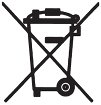
5. Meaning of the symbol "crossed out waste bin"
The symbol of a crossed out waste bin tags electrical and electronics equipment that is to be collected separately from unsorted municipal waste at the end of service life.
6. Additional information
BIKE24 is a member of the return system "take-e-back". For more information, please visit www.take-e-back.de.
Batteries Act (BattG)
Batteries and accumulators must not be disposed of with household waste. Customers are obliged to return used batteries and accumulators. A free return is possible at collection points of the public waste disposal carriers, at the manufacturers and points of sale.
Labelling
The symbol of a crossed out waste bin tags products which are to be collected separately from unsorted municipal waste at the end of service life. Close to this symbol you will find the chemical name of the harmful substance contained in the battery or accumulator. "Cd" stands for Cadmium, "Hg" for Mercury and "Pb" for Lead.
Return
You can return used batteries and accumulators at collection points of the public waste disposal carriers, to the manufacturers, distributors and to BIKE24. If you want to return used batteries and accumulators to BIKE24, please contact our service in advance. We will be happy to support you.
Information on the disposal of waste electrical and electronic equipment, batteries and packaging in accordance with the applicable national regulations can be found for your country via the following direct links:
Bulgaria
WEEE User Information
Electrical and electronic equipment should not be disposed of together with unsorted household waste. Products such as computers, chargers, household appliances, lamps, toys with electrical functions and other equipment that needs an electric current or electromagnetic field to work may become waste electrical and electronic equipment when they are no longer used.
In Bulgaria, WEEE is subject to separate collection and treatment requirements under the national Ordinance on Waste Electrical and Electronic Equipment, adopted by Council of Ministers Decree No. 256/2013 and published in State Gazette No. 100/2013. The purpose of these rules is to reduce the harmful impact of electrical and electronic waste on the environment and human health, and to support reuse, recycling and recovery of valuable materials.
Please do not place old electrical or electronic equipment in general household waste bins. Instead, return it through an available WEEE collection system, such as municipal collection points, retailer take-back options, authorised collection campaigns or other designated collection channels available in your municipality.
All products are marked with the crossed-out wheelie bin (separate collection symbol):
The crossed-out wheeled bin symbolizes that waste cannot be disposed of with unsorted household waste but must be collected separately from other types of waste to ensure environmentally sound treatment and recycling.
Before handing over old equipment, remove personal data from devices such as computers, and smart devices. Where batteries or accumulators can be safely removed by the user, please remove them and place them in the appropriate battery collection system. Batteries that cannot be removed safely should remain inside the equipment and be handled by authorised treatment operators.
Correct separate collection helps prevent hazardous substances from entering the environment and allows metals, plastics, glass and other materials to be recovered and reused. By returning WEEE through proper collection channels, consumers contribute to Bulgaria’s recycling and recovery system and support the circular economy.
Battery Recycling
Batteries and accumulators should not be disposed of with mixed household waste. This applies to portable batteries, rechargeable batteries, button cells, batteries used in electrical and electronic equipment, depending on the product type.
In Bulgaria, batteries, accumulators and waste batteries are regulated by the Ordinance on Batteries and Accumulators and Waste Batteries and Accumulators, adopted by Council of Ministers Decree No. 351/2012 and published in State Gazette No. 2/2013. The ordinance applies to all types of batteries and accumulators placed on the market, regardless of their shape, size, weight, composition or use, and also covers waste batteries and accumulators. It also includes requirements for informing end users about their role in separate collection and recycling.
Used batteries may contain substances that can be harmful to the environment and human health if they are not collected and treated correctly. At the same time, many batteries contain materials that can be recovered through specialised recycling processes.
Please return used batteries and accumulators to designated battery collection points. These may include collection boxes in shops, municipal collection points, schools, public buildings, retailer take-back systems or other authorised collection schemes. Do not open, crush, burn or damage batteries.
If a battery is leaking, swollen, hot or visibly damaged, avoid direct contact and follow the instructions of the collection point or local authority.
Where an electrical or electronic product contains removable batteries, remove the batteries before disposing of the product, unless this cannot be done safely. The device and the batteries should then be handed over through the appropriate separate collection channels.
Labels and markings on batteries, packaging or accompanying documents provide important information on use, safety and disposal.
The crossed-out wheeled bin symbol means that batteries must be collected separately.
Chemical symbols such as “Hg”, “Cd” or “Pb” indicate the presence of certain substances.
Batteries may contain substances that can endanger the environment and human health if disposed of improperly. This applies in particular to careless disposal, littering or disposal with residual waste.
The separate collection of waste batteries helps to avoid risks and recover valuable raw materials.
Product Packaging Recycling
Packaging helps protect products during transport, storage and use, but after use it becomes packaging waste. Packaging waste may include paper and cardboard boxes, plastic bottles and films, metal cans, composite packaging, glass bottles and jars, wooden packaging and other materials used to contain, protect, handle, deliver or present goods.
In Bulgaria, packaging and packaging waste are regulated by the Ordinance on Packaging and Packaging Waste, adopted by Council of Ministers Decree No. 271/2012 and published in State Gazette No. 85/2012. The ordinance sets requirements for packaging placed on the market and for the separate collection, reuse, recycling, recovery and disposal of packaging waste, including recycling and recovery targets.
Please separate packaging waste from mixed household waste whenever separate collection is available. Empty packaging before disposal and follow the instructions on the packaging, the collection container or the guidance provided by your municipality. In many municipalities, packaging waste is collected through colour-coded containers or other separate collection systems. Always follow the local sorting rules, as collection systems may differ by municipality.
Consumers can help reduce packaging waste by reusing packaging where possible, choosing products with recyclable or reduced packaging, flattening cardboard boxes to save space, and placing packaging in the correct separate collection container.
Croatia
WEEE User Information
In Croatia, the Directive 2012/19/EU on waste electrical and electronic equipment (WEEE-Directive) has been implemented at the national level by the Ordinance on the management of special categories of waste in the Fund system (Ordinance 124/2023).
To comply with the requirements of this legislation, Bike24 joined the Producer Responsibility Organization Trigana. For further information, please visit Trigana – Vaša odgovornost, naša skrb.
Bike24s registration numbers are: URBROJ: 563-06-3-1/412-24-13 and RPPO Number 332338.
All products placed on the market after 13 August 2005 are marked with the crossed-out wheelie bin (separate collection symbol):
The crossed-out wheeled bin symbolizes that waste cannot be disposed of with unsorted household waste but must be collected separately from other types of waste to ensure environmentally sound treatment and recycling.
Before you dispose of your end-of-life equipment, please:
- Delete personal data from the electrical or electronic equipment
- Remove used batteries and accumulators that are not enclosed in the electrical or electronic device, as well as lamps that can be removed from the WEEE without damaging it, before handing it in at a collection point.
Substances contained in waste electric and electronic equipment can harm the health of the environment, humans, and animals if handled incorrectly.
If possible, please avoid creating waste from electric and electronic equipment (e.g. by giving preference to devices with a longer life). Please consider ways to reuse electric or electronical equipment instead of disposing of it; for example, by recycling or repairing it.
WEEE From Private Households (Consumers)
It is not allowed to dispose of household appliances with the appropriate marking in unsorted municipal waste. WEEE can be returned free of charge at the point of sale or at any retailer selling EEE of the same type and function as the WEEE (1:1 take-back). All WEEE with external dimensions < 25 cm, irrespective of the brand and not conditional the purchase of new products at the point of sale, or in its immediate vicinity, can also be returned free of charge if the sales area intended for the sale of electrical appliances is at least 400 m2 (0:1 take-back). Alternatively, it can be handed it at designated collection points. For further information, please visit Kružno gospodarstvo | Fond za zaštitu okoliša i energetsku učinkovitost.
Bike24 bears the costs incurred in connection with the fulfilment of his take-back, collection and treatment obligations.
Battery Recycling
The European requirements regarding batteries and waste batteries according to Regulation (EU) 2023/1542 and Directive 2006/66/EC are implemented into national laws by the Ordinance 124/2023.
To comply with the requirements of this legislation, Bike24 joined the Producer Responsibility Organization Trigana. For further information, please visit Trigana – Vaša odgovornost, naša skrb.
Bike24s registration numbers are: URBROJ: 563-06-3-1/412-24-13 and RPPO Number 332338.
Batteries and accumulators are marked with the crossed-out wheelie bin (symbol of separate collection).
This means that it is not allowed to dispose of batteries and accumulators in unsorted municipal waste. Instead, they can be returned free of charge to specially designed places or to persons authorized to collect them. For further information, please visit Kružno gospodarstvo | Fond za zaštitu okoliša i energetsku učinkovitost.
Batteries containing high concentrations of the following hazardous substances are additionally labelled with the symbols for Cd (cadmium), Hg (mercury) or Pb (lead).
If handled incorrectly, substances contained in batteries can not only harm the environment, but also the health of humans and animals. Separate collection ensures that used batteries and accumulators are recycled in a way that protects the environment and conserves resources.
Please avoid the generation of waste from old batteries as far as possible (e.g. by favoring batteries with a longer service life or rechargeable batteries).
Product Packaging Recycling
The requirements of the European Packaging Directive (Directive 94/62/EC) have been implemented by the Ordinance on packaging and waste packaging, Single Use Plastic products and fishing tools containing plastic NN 137/2023.
To comply with the requirements of this legislation, Bike24 joined the Producer Responsibility Organization Trigana. For further information, please visit Trigana – Vaša odgovornost, naša skrb.
Bike24s registration numbers are: URBROJ: 563-06-3-1/412-24-13 and RPPO Number 332338.
End users make an important contribution to waste prevention by avoiding packaging, using reusable packaging and disposing of packaging properly. Reusable packaging is intended for multiple use and should be used in accordance with the designated return and reuse systems.
Packaging waste must be disposed of separately in accordance with the applicable collection rules. Special disposal instructions apply to packaging containing hazardous substances or residues.
Improper disposal, for example by littering or disposing of packaging in residual waste, may harm the environment, human health and public safety.
Cyprus
Electrical and electronic equipment should not be disposed of together with unsorted household waste. Products such as computers, chargers, household appliances, lamps, toys with electrical functions and other equipment that needs an electric current or electromagnetic field to work may become waste electrical and electronic equipment when they are no longer used.
Please do not place old electrical or electronic equipment in general household waste bins. Instead, return it through an available WEEE collection system, such as municipal collection points, retailer take-back options, authorized collection campaigns or other designated collection channels available in your municipality.
All products are marked with the crossed-out wheelie bin (separate collection symbol):
The crossed-out wheeled bin symbolizes that waste cannot be disposed of with unsorted household waste but must be collected separately from other types of waste to ensure environmentally sound treatment and recycling.
Before handing over old equipment, remove personal data from devices such as computers, and smart devices. Where batteries or accumulators can be safely removed by the user, please remove them and place them in the appropriate battery collection system. Batteries that cannot be removed safely should remain inside the equipment and be handled by authorized treatment operators.
Correct separate collection helps prevent hazardous substances from entering the environment and allows metals, plastics, glass and other materials to be recovered and reused.
Battery Recycling
Batteries and accumulators should not be disposed of with mixed household waste. This applies to portable batteries, rechargeable batteries, button cells, batteries used in electrical and electronic equipment, depending on the product type.
Used batteries may contain substances that can be harmful to the environment and human health if they are not collected and treated correctly. At the same time, many batteries contain materials that can be recovered through specialized recycling processes.
Please return used batteries and accumulators to designated battery collection points. These may include collection boxes in shops, municipal collection points, schools, public buildings, retailer take-back systems or other authorized collection schemes. Do not open, crush, burn or damage batteries.
If a battery is leaking, swollen, hot or visibly damaged, avoid direct contact and follow the instructions of the collection point or local authority.
Where an electrical or electronic product contains removable batteries, remove the batteries before disposing of the product, unless this cannot be done safely. The device and the batteries should then be handed over through the appropriate separate collection channels.
Labels and markings on batteries, packaging or accompanying documents provide important information on use, safety and disposal.
The crossed-out wheeled bin symbol means that batteries must be collected separately.
Chemical symbols such as “Hg”, “Cd” or “Pb” indicate the presence of certain substances.
Batteries may contain substances that can endanger the environment and human health if disposed of improperly. This applies in particular to careless disposal, littering or disposal with residual waste.
The separate collection of waste batteries helps to avoid risks and recover valuable raw materials.
Product Packaging Recycling
Packaging helps protect products during transport, storage and use, but after use it becomes packaging waste. Packaging waste may include paper and cardboard boxes, plastic bottles and films, metal cans, composite packaging, glass bottles and jars, wooden packaging and other materials used to contain, protect, handle, deliver or present goods.
End users make an important contribution to waste prevention by avoiding packaging, using reusable packaging and disposing of packaging properly. Reusable packaging is intended for multiple use and should be used in accordance with the designated return and reuse systems.
Packaging waste must be disposed of separately in accordance with the applicable collection rules. Special disposal instructions apply to packaging containing hazardous substances or residues.
Improper disposal, for example by littering or disposing of packaging in residual waste, may harm the environment, human health and public safety.
Czech Republic
WEEE Environmental Information
To comply with the requirements of this legislation Bike24 has joined the Czech Producer Responsibility Organization (PRO) Retela and has been registered with the national register of electrical equipment producers (“Seznam výrobců elektrozařízení”). The registration no. is WEEE No: (ECV) 09581/20-ECZ.
To protect the environment and human health, waste electrical and electronic equipment must not be disposed of with unsorted household waste. Waste electrical and electronic equipment must be collected separately and taken to designated collection or take-back points. This contributes to the reuse, recycling, and other recovery of valuable raw materials and helps to prevent possible negative effects of hazardous substances on the environment and human health.
The symbol of the crossed-out wheeled bin indicates that the electrical or electronic equipment concerned must not be disposed of with mixed municipal waste at the end of its service life but must be collected separately.
Public take-back points for waste electrical and electronic equipment in the Czech Republic are also published in the national register of take-back points. The national register is maintained by the Ministry of the Environment of the Czech Republic. For more information on take-back points available to you, please visit https://visoh2.mzp.cz/RegistrMistZO/RegistrMistZOPublic
To make sure that the devices are recycled in an environmentally friendly way, EEE can also be returned
- To the retailer when purchasing a new device of the same type or similar function. If the retailer is allowed to refuse to take back the WEEEs (e.g. if there is a lack of available space), he must inform customers of alternative collection schemes.
- free of charge and without no obligation to buy EEE of an equivalent type at retail shops with sales area relating to EEE of at least 400m2 of very small EEE (no external dimension more than 25cm).
Battery Recycling
To comply with its take-back and recovery obligations Bike24 has joined the Czech Producer Responsibility Organization (PRO) Ecobat for batteries and has been registered with the national register of battery and accumulator producers (“Seznam výrobců baterií a akumulátorů”) under the registration no. RTL/2021/13 (ECV) 09581/20-ECZ.
To protect the environment and human health, waste batteries and accumulators must not be disposed of with unsorted household waste. Waste batteries and accumulators must be collected separately and returned to designated collection or take-back points or handed over to authorized persons. Separate collection supports the recycling and recovery of valuable raw materials and helps prevent potential adverse effects on the environment and human health.
The crossed-out wheeled bin symbol indicates that the battery or accumulator concerned must not be disposed of with mixed municipal waste at the end of its service life but must be collected separately.
As an online retailer, we ensure that waste portable batteries and accumulators can be returned free of charge in accordance with the applicable Czech rules. End users may return waste portable batteries and accumulators without charge and without being required to purchase a new product.
Public take-back points for portable batteries or accumulators in the Czech Republic are also published in the national register of take-back points. The national register is maintained by the Ministry of the Environment of the Czech Republic. For more information on take-back points available to you, please visit https://visoh2.mzp.cz/RegistrMistZO/RegistrMistZOPublic.
Batteries and waste batteries must be used and disposed of in an environmentally sound manner. End users contribute to waste prevention by using batteries properly, protecting them from damage, heat and deep discharge, and following the manufacturer’s instructions in order to extend their service life. Where technically feasible, reuse, preparation for reuse, preparation for repurposing, repurposing and remanufacturing should also be considered.
Safety instructions must be observed when handling waste batteries. Batteries must not be opened, damaged, heated or thrown into fire. Lithium batteries in particular may cause short circuits, fires or explosions if handled improperly. Damaged batteries must therefore be handled with particular care.
Labels and markings on batteries, packaging or accompanying documents provide important information on use, safety and disposal. Chemical symbols such as “Hg”, “Cd” or “Pb” indicate the presence of certain substances.
Batteries may contain substances that can endanger the environment and human health if disposed of improperly. This applies in particular to careless disposal, littering or disposal with residual waste. The separate collection of waste batteries helps to avoid risks and recover valuable raw materials.
Packaging
In the Czech Republic, the collection and recovery of packaging waste is ensured through the applicable take-back and recovery system in accordance with the Packaging Act.
Bike24 fulfils its packaging take-back and recovery obligations through membership with a collective compliance system operated by Eko-Kom and is registered in list of persons pursuant to Section 14 of Act No. 477/2001 Coll. on Packaging under registration number EKO-Kom No 300499.
To protect the environment, packaging waste should not be disposed of outside designated collection systems.
Consumers can contribute to environmental protection by sorting packaging waste correctly and using the relevant separate collection systems available in the Czech Republic. Proper separate collection supports the recovery and recycling of packaging waste and helps reduce the adverse environmental effects associated with improper disposal.
Consumers can help prevent packaging waste by choosing products and packaging responsibly, by preferring reusable solutions where available, and by reducing unnecessary packaging waste in everyday use. Consumers also play an important role in ensuring that packaging waste can be recovered and recycled by separating packaging materials and disposing of them through the designated municipal collection systems.
For more information please visit EKO-KOM – Systém sběru a recyklace obalových odpadů.
Estonia
WEEE User Information
In Estonia, the Directive 2012/19/EU on waste electrical and electronic equipment (WEEE-Directive) has been implemented at the national level by the Waste Act RT I 2004, 9, 52.
To comply with the requirements of this legislation, Bike24 joined the Producer Responsibility Organization Elektroonikaromu. For further information, please visit EESTI ELEKTROONIKAROMU - elektroonikaseadmete kogumine.
Bike24s registration number is PRO210119 .
All products placed on the market after 13 August 2005 are marked with the crossed-out wheelie bin (separate collection symbol):
The crossed-out wheeled bin symbolizes that waste cannot be disposed of with unsorted household waste but must be collected separately from other types of waste to ensure environmentally sound treatment and recycling.
Before you dispose of your end-of-life equipment, please:
- Delete personal data from the electrical or electronic equipment
- Remove used batteries and accumulators that are not enclosed in the electrical or electronic device, as well as lamps that can be removed from the WEEE without damaging it, before handing it in at a collection point.
Substances contained in waste electric and electronic equipment can harm the health of the environment, humans, and animals if handled incorrectly.
If possible, please avoid creating waste from electric and electronic equipment (e.g. by giving preference to devices with a longer life). Please consider ways to reuse electric or electronic equipment instead of disposing of it; for example, by recycling or repairing it.
WEEE From Private Households (Consumers)
It is not allowed to dispose of household appliances with the appropriate marking in unsorted municipal waste. WEEE can be returned free of charge at the point of sale or at any retailer selling EEE of the same type and function as the WEEE (1:1 take-back). All WEEE with external dimensions < 25 cm, irrespective of the brand and not conditional the purchase of new products at the point of sale, or in its immediate vicinity, can also be returned free of charge if the sales area intended for the sale of electrical appliances is at least 400 m2 (0:1 take-back). Alternatively, it can be handed at designated collection points. For further information, please visit Elektroonikaromude kogumine - Eesti Elektroonikaromu.
Bike24 bears the costs incurred in connection with the fulfilment of his take-back, collection and treatment obligations. For more information on recycling costs visit Elektroonikaromude, patareide ja akude kogumiskohad.
Battery Recycling
The European requirements regarding batteries and waste batteries according to Regulation (EU) 2023/1542 and Directive 2006/66/EC are implemented into national laws by the Waste Act RT I 2004, 9, 52.
To comply with the requirements of this legislation, Bike24 joined the Producer Responsibility Organization Elektroonikaromu. For further information, please visit EESTI ELEKTROONIKAROMU - elektroonikaseadmete kogumine.
Bike24s registration number is PRO210119.
Bike24 bears the costs incurred in connection with the fulfilment of his take-back, collection and treatment obligations. For more information on recycling costs visit Elektroonikaromude, patareide ja akude kogumiskohad.
Batteries and accumulators are marked with the crossed-out wheelie bin (symbol of separate collection).
This means that it is not allowed to dispose of batteries and accumulators in unsorted municipal waste. Instead, they can be returned free of charge to specially designed places or to persons authorized to collect them. For further information, please visit Patareide kogumine - Eesti Elektroonikaromu.
Batteries containing high concentrations of the following hazardous substances are additionally labelled with the symbols for Cd (cadmium), Hg (mercury) or Pb (lead).
If handled incorrectly, substances contained in batteries can not only harm the environment, but also the health of humans and animals. Separate collection ensures that used batteries and accumulators are recycled in a way that protects the environment and conserves resources.
Please avoid the generation of waste from old batteries as far as possible (e.g. by favoring batteries with a longer service life or rechargeable batteries).
Product Packaging Recycling
The requirements of the European Packaging Directive (Directive 94/62/EC) have been implemented by the Packaging Act RT I 2004, 41, 278.
To comply with the requirements of this legislation, Bike24 joined the Producer Responsibility Organization ETO. For further information, please visit ETO - MTÜ Eesti Taaskasutusorganisatsioon.
Bike24s registration number is ETO Nr 002328.
End users make an important contribution to waste prevention by avoiding packaging, using reusable packaging and disposing of packaging properly. Reusable packaging is intended for multiple use and should be used in accordance with the designated return and reuse systems.
Packaging waste must be disposed of separately in accordance with the applicable collection rules. Special disposal instructions apply to packaging containing hazardous substances or residues.
For more information on available collection points visit ETO konteinerid » ETO.
Improper disposal, for example by littering or disposing of packaging in residual waste, may harm the environment, human health and public safety.
Greece
In Greece, the Directive 2012/19/EU on waste electrical and electronic equipment (WEEE-Directive) has been implemented at the national level by the Ministerial Decision No. 23615/651 /E.103.
To comply with the requirements of this legislation, Bike24 joined the Producer Responsibility Organization AMMON OVIS LTD. Electrocycle. For further information, please visit Ανακύκλωση συσκευών Α.Ε. - Aνακύκλωση Ηλεκτρικών Συσκευών.
Bike24s registration number is NRN No: 12856.
All products placed on the market after 13 August 2005 are marked with the crossed-out wheelie bin (separate collection symbol):
The crossed-out wheeled bin symbolizes that waste cannot be disposed of with unsorted household waste but must be collected separately from other types of waste to ensure environmentally sound treatment and recycling.
Before you dispose of your end-of-life equipment, please:
- Delete personal data from the electrical or electronic equipment.
- Remove used batteries and accumulators that are not enclosed in the electrical or electronic device, as well as lamps that can be removed from the WEEE without damaging it, before handing it in at a collection point.
Substances contained in waste electric and electronic equipment can harm the health of the environment, humans, and animals if handled incorrectly.
If possible, please avoid creating waste from electric and electronic equipment (e.g. by giving preference to devices with a longer life). Please consider ways to reuse electric or electronic equipment instead of disposing of it; for example, by recycling or repairing it.
WEEE From Private Households (Consumers)
It is not allowed to dispose of household appliances with the appropriate marking in unsorted municipal waste. WEEE can be returned free of charge at the point of sale or at any retailer selling EEE of the same type and function as the WEEE (1:1 take-back). All WEEE with external dimensions < 25 cm, irrespective of the brand and not conditional, the purchase of new products at the point of sale, or in its immediate vicinity, can also be returned free of charge if the sales area intended for the sale of electrical appliances is at least 400 m2 (0:1 take-back). Alternatively, it can be handed at designated collection points. For further information, please visit Σημεία ανακύκλωσης συσκευών - Ανακύκλωση συσκευών Α.Ε.
Bike24 bears the costs incurred in connection with the fulfilment of his take-back, collection and treatment obligations.
Battery Recycling
The European requirements regarding batteries and waste batteries according to Regulation (EU) 2023/1542 and Directive 2006/66/EC are implemented into national laws by Ministerial Decision No. 23615/651 /E.103.
To comply with the requirements of this legislation, Bike24 joined the Producer Responsibility Organization AMMON OVIS LTD AFIS. For further information, please visit Αρχική - ΑΦΗΣ.
Bike24s registration number is NRN No: 12856.
Batteries and accumulators are marked with the crossed-out wheelie bin (symbol of separate collection).
This means that it is not allowed to dispose of batteries and accumulators in unsorted municipal waste. Instead, they can be returned free of charge to specially designed places or to persons authorized to collect them. For further information, please visit Πού θα βρεις κάδο ΑΦΗΣ; - ΑΦΗΣ.
Batteries containing high concentrations of the following hazardous substances are additionally labelled with the symbols for Cd (cadmium), Hg (mercury) or Pb (lead).
If handled incorrectly, substances contained in batteries can not only harm the environment, but also the health of humans and animals. Separate collection ensures that used batteries and accumulators are recycled in a way that protects the environment and conserves resources.
Please avoid the generation of waste from old batteries as far as possible (e.g. by favoring batteries with a longer service life or rechargeable batteries).
Product Packaging Recycling
End users make an important contribution to waste prevention by avoiding packaging, using reusable packaging and disposing of packaging properly. Reusable packaging is intended for multiple uses and should be used in accordance with the designated return and reuse systems.
Packaging waste must be disposed of separately in accordance with the applicable collection rules. Special disposal instructions apply to packaging containing hazardous substances or residues.
Improper disposal, for example by littering or disposing of packaging in residual waste, may harm the environment, human health and public safety.
Hungary
WEEE User Information
In Hungary, the Directive 2012/19/EU on waste electrical and electronic equipment (WEEE-Directive) has been implemented at the national level by the Government Decree on Extended Producer Responsibility 80/2023 (EPR-Decree 80/2023) and the Government Decree 197/2014.
To comply with the requirements of this legislation, Bike24 joined the Producer Responsibility Organization Electro-Coord / MOHU / eEPR. For further information, please visit Electro-Coord – E-Waste Collection and MOHU | Főoldal.
Bike24s registration number is KÜJ number: 104246311 and MOHU partner ID: 1059652.
All products placed on the market after 13 August 2005 are marked with the crossed-out wheelie bin (separate collection symbol):
The crossed-out wheeled bin symbolizes that waste cannot be disposed of with unsorted household waste but must be collected separately from other types of waste to ensure environmentally sound treatment and recycling.
Before you dispose of your end-of-life equipment, please:
- Delete personal data from the electrical or electronic equipment.
- Remove used batteries and accumulators that are not enclosed in the electrical or electronic device, as well as lamps that can be removed from the WEEE without damaging it, before handing it in at a collection point.
Substances contained in waste electric and electronic equipment can harm the health of the environment, humans, and animals if handled incorrectly.
If possible, please avoid creating waste from electric and electronic equipment (e.g. by giving preference to devices with a longer life). Please consider ways to reuse electric or electronic equipment instead of disposing of it; for example, by recycling or repairing it.
WEEE From Private Households (Consumers)
It is not allowed to dispose of household appliances with the appropriate marking in unsorted municipal waste. WEEE can be returned free of charge at the point of sale or at any retailer selling EEE of the same type and function as the WEEE (1:1 take-back). All WEEE with external dimensions < 25 cm, irrespective of the brand and not conditional, the purchase of new products at the point of sale, or in its immediate vicinity, can also be returned free of charge if the sales area intended for the sale of electrical appliances is at least 400 m2 (0:1 take-back). Alternatively, it can be handed at designated collection points. For further information, please visit Electro-Coord – E-Hulladék gyűjtés.
Bike24 bears the costs incurred in connection with the fulfilment of his take-back, collection and treatment obligations.
Battery Recycling
The European requirements regarding batteries and waste batteries according to Regulation (EU) 2023/1542 and Directive 2006/66/EC are implemented into national laws by the Government Decree on Extended Producer Responsibility 80/2023 (EPR-Decree 80/2023) and the Government Decree No. 445/2012 (XII. 29.).
To comply with the requirements of this legislation, Bike24 joined the Producer Responsibility Organization Electro-Coord / MOHU / eEPR. For further information, please visit Electro-Coord – E-Waste Collection and MOHU | Főoldal.
Bike24s registration number is KÜJ number: 104246311 and MOHU partner ID: 1059652.
Batteries and accumulators are marked with the crossed-out wheelie bin (symbol of separate collection).
This means that it is not allowed to dispose of batteries and accumulators in unsorted municipal waste. Instead, they can be returned free of charge to specially designed places or to persons authorized to collect them. For further information, please visit Electro-Coord – E-Hulladék gyűjtés.
Batteries containing high concentrations of the following hazardous substances are additionally labelled with the symbols for Cd (cadmium), Hg (mercury) or Pb (lead).
If handled incorrectly, substances contained in batteries can not only harm the environment, but also the health of humans and animals. Separate collection ensures that used batteries and accumulators are recycled in a way that protects the environment and conserves resources.
Please avoid the generation of waste from old batteries as far as possible (e.g. by favoring batteries with a longer service life or rechargeable batteries).
Product Packaging Recycling
End users make an important contribution to waste prevention by avoiding packaging, using reusable packaging and disposing of packaging properly. Reusable packaging is intended for multiple uses and should be used in accordance with the designated return and reuse systems.
Packaging waste must be disposed of separately in accordance with the applicable collection rules. Special disposal instructions apply to packaging containing hazardous substances or residues.
Improper disposal, for example by littering or disposing of packaging in residual waste, may harm the environment, human health and public safety.
Ireland
In Ireland, the Directive 2012/19/EU on waste electrical and electronic equipment (WEEE-Directive) has been implemented at the national level by the Waste Electrical and Electronic Equipment Regulations 2014 (S.I. No. 149/2014) and as amended.
All products placed on the market after 13 August 2005 are labelled with the crossed-out wheelie bin (separate collection symbol):
The crossed-out wheeled bin symbolizes that waste cannot be disposed of with unsorted household waste but must be collected separately from other types of waste to ensure environmentally sound treatment and recycling.
Before you dispose of your end-of-life equipment, please:
- Delete personal data from the electrical or electronic equipment
- Remove used batteries and accumulators that are not enclosed in the electrical or electronic device, as well as lamps that can be removed from the WEEE without damaging it, before handing it in at a collection point.
Substances contained in waste electric and electronic equipment can harm the health of the environment, humans, and animals if handled incorrectly.
If possible, please avoid creating waste from electric and electronic equipment (e.g. by giving preference to devices with a longer life). Please consider ways to reuse electric or electronical equipment instead of disposing of it; for example, by recycling or repairing it.
WEEE From Private Households (Consumers)
The Bike24 company has joined the WEEE Ireland compliance scheme for the collection and treatment of WEEE from consumers. Bike24 is registered at the Producer Register Limited under the following registration number for WEEE:
- Bike24 3050WB
Waste Electrical and Electronic Equipment (WEEE) is taken back free of charge on a one-for-one, like-for-like basis. Each local authority must also accept household WEEE free of charge at its recycling facilities.Consumers should contact their local municipality or visit the WEEE Ireland website at Where can I recycle? - WEEE Ireland to identify collection points or obtain additional information about the treatment of this WEEE.
Battery Recycling
The European requirements regarding batteries and waste batteries according to Regulation (EU) 2023/1542 and Directive 2006/66/EC are implemented into national laws by the EU (Batteries and Accumulators) Regulations 2014 (S.I. No. 283/2014) and as amended.
Batteries and accumulators are marked with the crossed-out wheelie bin (symbol of separate collection). This means that batteries and accumulators cannot be disposed of with normal household waste and must be collected separately.
Batteries and waste batteries must be used and disposed of in an environmentally sound manner. End users contribute to waste prevention by using batteries properly, protecting them from damage, heat and deep discharge, and following the manufacturer’s instructions in order to extend their service life. Where technically feasible, reuse, preparation for reuse, preparation for repurposing, repurposing and remanufacturing should also be considered.
Waste batteries must not be disposed of in household waste or as unsorted municipal waste. They must be collected separately and returned to designated take-back points, collection points or municipal collection facilities so that they can be properly treated and recycled.
Safety instructions must be observed when handling waste batteries.
Batteries must not be opened, damaged, heated or thrown into fire. Lithium batteries in particular may cause short circuits, fires or explosions if handled improperly. Damaged batteries must therefore be handled with particular care.
Labels and markings on batteries, packaging or accompanying documents provide important information on use, safety and disposal.
Chemical symbols such as “Hg”, “Cd” or “Pb” indicate the presence of certain substances.
Batteries may contain substances that can endanger the environment and human health if disposed of improperly. This applies in particular to careless disposal, littering or disposal with residual waste.
The separate collection of waste batteries helps to avoid risks and recover valuable raw materials.
Bike24 has joined the WEEE Ireland compliance scheme for collecting and recycling end-of-life batteries and is registered at the Producer Register Limited under the following registration number for batteries:
- Bike24 3050WB
Waste batteries including rechargeable batteries are taken back free of charge. You are not obliged to make any purchase when returning old batteries. Each local authority must also accept household WEEE and small batteries free of charge at its recycling facilities. Owners or end users of batteries should contact their local municipality or visit the WEEE Ireland website at Where can I recycle? - WEEE Ireland to identify collection points or obtain additional information about battery recycling.
Packaging Recycling
In Ireland, the requirements of the European Packaging Directive (Directive 94/62/EC) and of the EU Packaging Regulation EU 2025/40 have been implemented by the Packaging Regulations 2014 (S.I. No. 282/2014) and as amended.
End users make an important contribution to waste prevention by avoiding packaging, using reusable packaging and disposing of packaging properly. Reusable packaging is intended for multiple use and should be used in accordance with the designated return and reuse systems.
Packaging waste must be disposed of separately in accordance with the applicable collection rules. Special disposal instructions apply to packaging containing hazardous substances or residues.
Improper disposal, for example by littering or disposing of packaging in residual waste, may harm the environment, human health and public safety.
Bike24 has joined REPAK for collecting and recycling product packaging waste. Owners or end users of product packaging should contact their local municipality or visit the REPAK website at Where you can take your recycling waste - My Waste to identify collection points or obtain additional information about packaging recycling.
Latvia
In Latvia, Directive 2012/19/EU on waste electrical and electronic equipment (WEEE Directive) has been implemented, inter alia, through the Waste Management Law and Cabinet Regulation No. 534 on categories and marking requirements for electrical and electronic equipment and requirements and procedures for managing waste equipment.
To comply with the requirements of this legislation Bike24 has joined the Producer Responsibility Organization (PRO) Zala Josta and is registered in the Register for Producers of Electrical and Electronic Equipment (EEIR Register). The official registration number is DEHRB 34244.
For further information, please see Zaļā josta.
Electrical and electronic equipment is marked with the crossed-out wheeled-bin symbol:
The crossed-out wheeled bin symbolizes that waste cannot be disposed of with unsorted household waste but must be collected separately from other types of waste to ensure environmentally sound treatment and recycling.
Waste electrical and electronic equipment may contain substances, mixtures and components that can harm the environment and human health if not handled correctly.
Please help reduce waste and prevent littering by extending the life of electrical and electronic equipment wherever possible, for example through maintenance, repair, reuse or recycling.
WEEE From Private Households (Consumers)
It is not allowed to dispose of household appliances with the appropriate marking (crossed-out wheeled bin) in unsorted municipal waste.
Each local authority must also accept household WEEE free of charge at its recycling facilities. Consumers should visit the public waste sorting map Šķiro viegli: https://skiroviegli.lv/ or visit the Zala Josta website at Kur nodot atkritumus? - Zaļā Josta to identify collection points or obtain additional information about the treatment of this WEEE.
Battery Recycling
In Latvia, batteries and accumulators are regulated by the Regulation (EU) 2023/1542 concerning batteries and waste batteries and Latvian Waste Management Law.
To comply with the requirements of this legislation, Bike24 has joined the Producer Responsibility Organization (PRO) Zala Josta and is registered in the Register of battery or accumulator manufacturers (BAR Register). The official registration number is DEHRB 34244.
Zala Josta takes over the take-back obligation of Bike24 and organizes the collection of batteries, accumulators, and battery packs.
Batteries and waste batteries must be used and disposed of in an environmentally sound manner. End users contribute to waste prevention by using batteries properly, protecting them from damage, heat and deep discharge, and following the manufacturer’s instructions in order to extend their service life. Where technically feasible, reuse, preparation for reuse, preparation for repurposing, repurposing and remanufacturing should also be considered.
Waste batteries must not be disposed of in household waste or as unsorted municipal waste. They must be collected separately and returned to designated take-back points, collection points or municipal collection facilities so that they can be properly treated and recycled.
Safety instructions must be observed when handling waste batteries. Batteries must not be opened, damaged, heated or thrown into fire. Lithium batteries in particular may cause short circuits, fires or explosions if handled improperly. Damaged batteries must therefore be handled with particular care.
Labels and markings on batteries, packaging or accompanying documents provide important information on use, safety and disposal. The crossed-out wheeled bin symbol means that batteries must be collected separately. Chemical symbols such as “Hg”, “Cd” or “Pb” indicate the presence of certain substances.
Batteries may contain substances that can endanger the environment and human health if disposed of improperly. This applies in particular to careless disposal, littering or disposal with residual waste. The separate collection of waste batteries helps to avoid risks and recover valuable raw materials.
For more information on collection point locations and accepted waste types in Latvia, please visit the Zala Josta website at Kur nodot atkritumus? - Zaļā Josta or the public waste sorting map Šķiro viegli: https://skiroviegli.lv/.
Lithuania
WEEE User Information
In Lithuania, the Directive 2012/19/EU on waste electrical and electronic equipment (WEEE-Directive) has been implemented at the national level by the Law on Waste Management (16 June 1998 No VIII-787).
To comply with the requirements of this legislation, Bike24 joined the Producer Responsibility Organization GIA. For further information, please visit Home - Gamintojų ir importuotojų asocijacija.
Bike24s registration number is GIA No. EIA-21/068.
All products placed on the market after 13 August 2005 are marked with the crossed-out wheelie bin (separate collection symbol):
The crossed-out wheeled bin symbolizes that waste cannot be disposed of with unsorted household waste but must be collected separately from other types of waste to ensure environmentally sound treatment and recycling.
Before you dispose of your end-of-life equipment, please:
- Delete personal data from the electrical or electronic equipment
- Remove used batteries and accumulators that are not enclosed in the electrical or electronic device, as well as lamps that can be removed from the WEEE without damaging it, before handing it in at a collection point.
Substances contained in waste electric and electronic equipment can harm the health of the environment, humans, and animals if handled incorrectly.
If possible, please avoid creating waste from electric and electronic equipment (e.g. by giving preference to devices with a longer life). Please consider ways to reuse electric or electronical equipment instead of disposing of it; for example, by recycling or repairing it.
WEEE From Private Households (Consumers)
It is not allowed to dispose of household appliances with the appropriate marking in unsorted municipal waste. WEEE can be returned free of charge at the point of sale or at any retailer selling EEE of the same type and function as the WEEE (1:1 take-back). All WEEE with external dimensions < 25 cm, irrespective of the brand and not conditional the purchase of new products at the point of sale, or in its immediate vicinity, can also be returned free of charge if the sales area intended for the sale of electrical appliances is at least 400 m2 (0:1 take-back). Alternatively, it can be handed at designated collection points. For further information, please visit Gyventojams ir įmonėms - eei.lt.
Bike24 bears the costs incurred in connection with the fulfilment of his take-back, collection and treatment obligations.
Battery Recycling
The European requirements regarding batteries and waste batteries according to Regulation (EU) 2023/1542 and Directive 2006/66/EC are implemented into national laws by the Law on Waste Management (16 June 1998 No VIII-787).
To comply with the requirements of this legislation, Bike24 joined the Producer Responsibility Organization GIA. For further information, please visit Home - Gamintojų ir importuotojų asocijacija.
Bike24s registration number is GIA No. B-21/107.
Batteries and accumulators are marked with the crossed-out wheelie bin (symbol of separate collection).
This means that it is not allowed to dispose of batteries and accumulators in unsorted municipal waste. Instead, they can be returned free of charge to specially designed places or to persons authorized to collect them. For further information, please visit Gyventojams ir įmonėms - eei.lt.
Batteries containing high concentrations of the following hazardous substances are additionally labelled with the symbols for Cd (cadmium), Hg (mercury) or Pb (lead).
If handled incorrectly, substances contained in batteries can not only harm the environment, but also the health of humans and animals. Separate collection ensures that used batteries and accumulators are recycled in a way that protects the environment and conserves resources.
Please avoid the generation of waste from old batteries as far as possible (e.g. by favoring batteries with a longer service life or rechargeable batteries).
Product Packaging Recycling
The requirements of the European Packaging Directive (Directive 94/62/EC) have been implemented by the Law on the Management of Packaging and Packaging Waste (25 September 2001-No IX-517).
To comply with the requirements of this legislation, Bike24 joined the Producer Responsibility Organization GIA. For further information, please visit Home - Gamintojų ir importuotojų asocijacija.
Bike24s registration number is GIA No. BIK210831-4657.
End users make an important contribution to waste prevention by avoiding packaging, using reusable packaging and disposing of packaging properly. Reusable packaging is intended for multiple use and should be used in accordance with the designated return and reuse systems.
Packaging waste must be disposed of separately in accordance with the applicable collection rules. Special disposal instructions apply to packaging containing hazardous substances or residues.
Improper disposal, for example by littering or disposing of packaging in residual waste, may harm the environment, human health and public safety.
Malta
WEEE User Information
In Malta, the Directive 2012/19/EU on waste electrical and electronic equipment (WEEE-Directive) has been implemented at the national level by the Subsidiary Legislation 549.89 – The Waste Management (Electrical and Electronic Equipment) Regulations 2014, as amended.
To comply with the requirements of this legislation, Bike24 has joined the Producer Responsibility Organization (PRO) and is registered with the Environment and Resources Authority (ERA) in the Register for Producers of Electrical and Electronic Equipment.
Electrical and electronic equipment is marked with the crossed-out wheeled-bin symbol:
The crossed-out wheeled bin symbolizes that waste cannot be disposed of with unsorted household waste but must be collected separately from other types of waste to ensure environmentally sound treatment and recycling.
Before you dispose of your end-of-life equipment, please:
- Delete personal data from the electrical or electronic equipment
- Remove used batteries and accumulators that are not enclosed in the electrical or electronic device, as well as lamps that can be removed from the WEEE without damaging it, before handing it in at a collection point.
Waste electrical and electronic equipment may contain substances, mixtures and components that can harm the environment and human health if not handled correctly.
Please help reduce waste and prevent littering by extending the life of electrical and electronic equipment wherever possible, for example through maintenance, repair, reuse or recycling.
WEEE From Private Households (Consumers)
It is not allowed to dispose of household appliances with the appropriate marking in unsorted municipal waste. To make sure that the devices are recycled in an environmentally friendly way, EEE can also be returned:
- to the retailer when purchasing a new device of the same type or similar function. If the retailer is allowed to refuse to take back the WEEEs (e.g. if there is a lack of available space), he must inform customers of alternative collection schemes.
- free of charge and with no obligation to buy EEE of an equivalent type at retail shops with sales area relating to EEE of at least 400m2 of very small EEE (no external dimension more than 25cm).
Battery Recycling
In Malta, batteries and accumulators are regulated by the Regulation (EU) 2023/1542 concerning batteries and waste batteries and Subsidiary Legislation 549.178 Waste Management (Waste Batteries) Regulations.
To comply with the requirements of this legislation, Bike24 has joined the Producer Responsibility Organization (PRO) and is registered with the Environment and Resources Authority (ERA) in the Register of Producers of Batteries and Accumulators.
Batteries and waste batteries must be used and disposed of in an environmentally sound manner. End users contribute to waste prevention by using batteries properly, protecting them from damage, heat and deep discharge, and following the manufacturer’s instructions in order to extend their service life. Where technically feasible, reuse, preparation for reuse, preparation for repurposing, repurposing and remanufacturing should also be considered.
Waste batteries must not be disposed of in household waste or as unsorted municipal waste. They must be collected separately and returned to designated take-back points, collection points or municipal collection facilities so that they can be properly treated and recycled.
Safety instructions must be observed when handling waste batteries. Batteries must not be opened, damaged, heated or thrown into fire. Lithium batteries in particular may cause short circuits, fires or explosions if handled improperly. Damaged batteries must therefore be handled with particular care.
Labels and markings on batteries, packaging or accompanying documents provide important information on use, safety and disposal. The crossed-out wheeled bin symbol means that batteries must be collected separately. Chemical symbols such as “Hg”, “Cd” or “Pb” indicate the presence of certain substances.
Batteries may contain substances that can endanger the environment and human health if disposed of improperly. This applies in particular to careless disposal, littering or disposal with residual waste. The separate collection of waste batteries helps to avoid risks and recover valuable raw materials.
For more information on available collection options and accepted household waste types in Malta, please visit the Environment and Resources Authority (ERA) page: https://era.org.mt/topic/extended-producer-responsibility-2/.
Packaging Recycling
In Malta, the requirements of the European Packaging Directive (Directive 94/62/EC) and EU Packaging Regulation EU 2025/40 have been implemented by the Subsidiary Legislation 549.43- Waste Management (Packaging and Packaging Waste) Regulations, as amended.
To comply with the requirements of this legislation, Bike24 has joined the Producer Responsibility Organization (PRO) and is registered with the Environment and Resources Authority (ERA) in the Register of Producers of Packaging or Packaging Material.
Furthermore, the compliance scheme organizes the collection of consumer packaging and guarantees its recycling through an approved treatment facility.
End users make an important contribution to waste prevention by avoiding packaging, using reusable packaging and disposing of packaging properly. Reusable packaging is intended for multiple use and should be used in accordance with the designated return and reuse systems.
Packaging waste must be disposed of separately in accordance with the applicable collection rules. Special disposal instructions apply to packaging containing hazardous substances or residues.
Improper disposal, for example by littering or disposing of packaging in residual waste, may harm the environment, human health and public safety.
For more information on available collection options and accepted household waste types in Malta, please visit the Environment and Resources Authority (ERA) page: https://era.org.mt/topic/extended-producer-responsibility-2/.
Norway
WEEE User Information
In Norway, the Directive 2012/19/EU on waste electrical and electronic equipment (WEEE-Directive) has been implemented at the national level by the Regulations on the recovery and treatment of waste (Waste Regulations, FOR-2004-06-01-930) of 2004, as amended.
To comply with the requirements of this legislations Bike24 has joined the Norwegian Producer Responsibility Organization (PRO) Norsirk. For further information please visit Forside - NORSIRK.
Electrical and electronic equipment are marked with the crossed-out wheelie bin (separate collection symbol):
The crossed-out wheeled bin symbolizes that waste cannot be disposed of with unsorted household waste but must be collected separately from other types of waste to ensure environmentally sound treatment and recycling.
Before you dispose of your end-of-life equipment, please:
- Delete personal data from the electrical or electronic equipment
- Remove used batteries and accumulators that are not enclosed in the electrical or electronic device, as well as lamps that can be removed from the WEEE without damaging it, before handing it in at a collection point.
Substances contained in waste electric and electronic equipment can harm the health of the environment, humans, and animals if handled incorrectly.
If possible, please avoid creating waste from electric and electronic equipment (e.g. by giving preference to devices with a longer life). Please consider ways to reuse electric or electronical equipment instead of disposing of it; for example, by recycling or repairing it.
WEEE From Private Households (Consumers)
Electrical and electronic waste must never be disposed of together with ordinary household waste.
In Norway, consumers can return waste electrical and electronic equipment (WEEE) free of charge. Household WEEE can be handed in at municipal collection points and at retailers selling electrical or electronic equipment. Retailers must accept equivalent end-of-life products free of charge, regardless of brand. Large retailers with a sales area of more than 400 m² for electrical and electronic equipment must also accept small electronics with an outer dimension below 25 cm, even if no equivalent product is purchased.
If products are sold online, by mail order or otherwise outside the shop premises, the retailer must offer an efficient return solution. For small electronics, a free return service must be offered for every sale. For larger units, the retailer may charge only the direct shipping cost, and this cost must not exceed the shipping price for a corresponding new product.
Consumers can therefore dispose of WEEE in Norway in the following ways:
- at municipal collection facilities,
- in-store at retailers of electrical and electronic equipment,
- through the return solution offered by online and distance sellers.
Please do not place WEEE in residual waste. Separate collection helps ensure proper treatment, reuse and recycling, and prevents hazardous substances from entering the environment.
On https://sortere.no/, you can enter your home address and see on the map where your nearest return points and recycling stations are located. By clicking on the different stations, you can see which types of waste each station receives.
Battery Recycling
The European requirements regarding batteries and waste batteries according to Regulation (EU) 2023/1542 and Directive 2006/66/EC are implemented into national laws by the Regulations on the recovery and treatment of waste (Waste Regulations, FOR-2004-06-01-930) of 2004, as amended.
To comply with the legislation, Bike24 has joined the Battery Compliance Scheme Norsirk.
Batteries and waste batteries must be used and disposed of in an environmentally sound manner. End users contribute to waste prevention by using batteries properly, protecting them from damage, heat and deep discharge, and following the manufacturer’s instructions in order to extend their service life. Where technically feasible, reuse, preparation for reuse, preparation for repurposing, repurposing and remanufacturing should also be considered.
Waste batteries must not be disposed of in household waste or as unsorted municipal waste. They must be collected separately and returned to designated take-back points, collection points or municipal collection facilities so that they can be properly treated and recycled.
Safety instructions must be observed when handling waste batteries. Batteries must not be opened, damaged, heated or thrown into fire. Lithium batteries in particular may cause short circuits, fires or explosions if handled improperly. Damaged batteries must therefore be handled with particular care.
Labels and markings on batteries, packaging or accompanying documents provide important information on use, safety and disposal. The crossed-out wheeled bin symbol means that batteries must be collected separately. Chemical symbols such as “Hg”, “Cd” or “Pb” indicate the presence of certain substances.
Batteries may contain substances that can endanger the environment and human health if disposed of improperly. This applies in particular to careless disposal, littering or disposal with residual waste. The separate collection of waste batteries helps to avoid risks and recover valuable raw materials.
Packaging Recycling
In Norway, the requirements of the European Packaging Directive 94/62/EC and the EU Packaging Regulation 2025/40 have been implemented by the Regulations on the recovery and treatment of waste (Waste Regulations, FOR-2004-06-01-930) of 2004, as amended.
According to the above-mentioned legislation, the producer is obligated to register with the Norwegian producer register.
Norsirk takes on Bike24’s packaging waste-management obligations under the applicable Norwegian legislation. Furthermore, the compliance scheme organizes the collection of consumer packaging and guarantees its recycling through an approved treatment facility.
End users make an important contribution to waste prevention by avoiding packaging, using reusable packaging and disposing of packaging properly. Reusable packaging is intended for multiple use and should be used in accordance with the designated return and reuse systems.
Packaging waste must be disposed of separately in accordance with the applicable collection rules. Special disposal instructions apply to packaging containing hazardous substances or residues.
Improper disposal, for example by littering or disposing of packaging in residual waste, may harm the environment, human health and public safety.
Portugal
WEEE User Information
The provisions of the European WEEE Directive 2012/19/EU (WEEE Directive) have been implemented in Portugal by Decree-Law Nr. 152-D/2017, on the regime of specific waste streams subject to the principle of extended producer responsibility, Chapter III, Section IV Waste Electrical and Electronic Equipment.
According to the aforementioned legislation, producers of Electrical and Electronic Equipment (EEE) are obligated to register with the Portuguese Environmental Agency (APA).
Bike24 places electric and electronic equipment onto the Portuguese market and therefore is registered under No. PT101990 at the Integrated Environmental Licensing System SILIAmb.
To comply with the regulations, Bike24 has also joined the compliance scheme Amb3e / Electrao. For further information, please see - Electrão - Confiar para reciclar.
The compliance schemes help the producers to fulfil their legal obligations stipulated in Decree-Law Nr. 152-D/2017. Therefore, the compliance schemes organize the collection of WEEE and guarantees recycling by an approved treatment facility.
All products placed on the market after 13 August 2005 are labelled with the crossed-out wheelie bin (standard symbol for WEEE disposal):
Users of electrical and electronic equipment (EEE) with the Waste of Electric and Electronic Equipment (WEEE) marking per Annex IV of the WEEE Directive (crossed-out wheelie bin) must not dispose of end of life EEE as unsorted municipal waste, but use the collection framework available to them for the return, recycle, recovery of WEEE and minimize any potential effects of EEE on the environment and human health due to the presence of hazardous substances. Please note that it is not allowed to leave WEEE in public places.
Please note that each end user is responsible for deleting personal data from the electrical or electronic equipment.
Please remove used batteries and accumulators that are not enclosed in the electrical or electronic device, as well as lamps that can be removed from the WEEE without damaging it, before handing it in at a collection point.
The following options are available for disposal of old devices:
WEEE from Private Households (Consumers)
Private users of electrical and electronic equipment with the appropriate marking are not allowed to dispose of these with the unsorted municipal waste but must use the cost-free separate collection points.
Please visit Onde Reciclar to identify collection points and to obtain additional information about collection, recycling and treatment.
Consumers can also return WEEE to retailers free of charge on a 1:1 basis as part of a replacement sale.
Battery Recycling
The European requirements regarding batteries and waste batteries according to Regulation (EU) 2023/1542 and Directive 2006/66/EC are implemented into national laws by Decree-Law Nr. 152-D/2017 on the regime of specific waste streams subject to the principle of extended producer responsibility Chapter III, Section V Batteries and Accumulators into Portuguese law. According to the aforementioned legislation, producers of batteries and accumulators are obliged to register with the Portuguese Environmental Agency (APA).
Bike24 places batteries and accumulators onto the Portuguese market and therefore Bike24 is registered under Battery No: PT06002317 at the Integrated Environmental Licensing System SILIAmb.
To comply with the regulations, Bike24 has also joined the compliance scheme Electrao. For further information, please see: Electrão - Confiar para reciclar
The compliance schemes help the producers to fulfil their legal obligations stipulated in Decree-Law Nr. 152-D/2017. Therefore, the compliance schemes organize the collection of waste batteries and guarantees recycling by an approved treatment facility.
Some products contain portable batteries. As batteries are not allowed to be disposed of together with other waste due to substances potentially harmful to human health and the environment, they are labelled with the crossed-out wheeled bin.
Please separate these batteries from your device and dispose of them properly at collection points. Please note that it is not allowed to leave waste batteries and accumulators in public places.
Batteries and waste batteries must be used and disposed of in an environmentally sound manner. End users contribute to waste prevention by using batteries properly, protecting them from damage, heat and deep discharge, and following the manufacturer’s instructions in order to extend their service life. Where technically feasible, reuse, preparation for reuse, preparation for repurposing, repurposing and remanufacturing should also be considered.
Safety instructions must be observed when handling waste batteries. Batteries must not be opened, damaged, heated or thrown into fire. Lithium batteries in particular may cause short circuits, fires or explosions if handled improperly. Damaged batteries must therefore be handled with particular care.
Labels and markings on batteries, packaging or accompanying documents provide important information on use, safety and disposal. The crossed-out wheeled bin symbol means that batteries must be collected separately. Chemical symbols such as “Hg”, “Cd” or “Pb” indicate the presence of certain substances.
Batteries may contain substances that can endanger the environment and human health if disposed of improperly. This applies in particular to careless disposal, littering or disposal with residual waste. The separate collection of waste batteries helps to avoid risks and recover valuable raw materials.
Generally, portable batteries can be disposed of at no extra cost in battery collection centres. Please, also note that waste batteries are collected at retail stores where batteries are sold as well as at municipal collection points For more information, please contact your local municipality or go to Onde Reciclar to find the closest battery collection centre.
Packaging Recycling
The requirements of the European Packaging Directive (Directive 94/62/EC) and the European Packaging Regulation EU 2025/40 are transposed into national law Decree-Law Nr. 152-D/2017 and as amended on the regime of specific waste streams subject to the principle of extended producer responsibility, Chapter III, Section I Packaging and Packaging waste.
According to the aforementioned legislation, companies that pack products or import packed products are obligated to register with the Portuguese Environmental Agency (APA).
Bike24 places packaged products onto the Portuguese market and is therefore registered under No. Packaging No: PT01111833at the Integrated Environmental Licensing System SILIAmb.
To comply with the regulations, Bike24 has also joined the compliance scheme Ponto Verde.
For further information, please see Página inicial - Sociedade Ponto Verde.
End users make an important contribution to waste prevention by avoiding packaging, using reusable packaging and disposing of packaging properly. Reusable packaging is intended for multiple use and should be used in accordance with the designated return and reuse systems.
Packaging waste must be disposed of separately in accordance with the applicable collection rules. Special disposal instructions apply to packaging containing hazardous substances or residues.
Improper disposal, for example by littering or disposing of packaging in residual waste, may harm the environment, human health and public safety.
Romania
WEEE User Information
Electrical and electronic equipment should not be disposed of together with unsorted household waste. Products such as computers, chargers, household appliances, lamps, toys with electrical functions and other equipment that needs an electric current or electromagnetic field to work may become waste electrical and electronic equipment when they are no longer used.
Please do not place old electrical or electronic equipment in general household waste bins. Instead, return it through an available WEEE collection system, such as municipal collection points, retailer take-back options, authorized collection campaigns or other designated collection channels available in your municipality.
All products are marked with the crossed-out wheelie bin (separate collection symbol):
The crossed-out wheeled bin symbolizes that waste cannot be disposed of with unsorted household waste but must be collected separately from other types of waste to ensure environmentally sound treatment and recycling.
Before handing over old equipment, remove personal data from devices such as computers, and smart devices. Where batteries or accumulators can be safely removed by the user, please remove them and place them in the appropriate battery collection system. Batteries that cannot be removed safely should remain inside the equipment and be handled by authorized treatment operators.
Correct separate collection helps prevent hazardous substances from entering the environment and allows metals, plastics, glass and other materials to be recovered and reused.
Battery Recycling
Batteries and accumulators should not be disposed of with mixed household waste. This applies to portable batteries, rechargeable batteries, button cells, batteries used in electrical and electronic equipment, depending on the product type.
Used batteries may contain substances that can be harmful to the environment and human health if they are not collected and treated correctly. At the same time, many batteries contain materials that can be recovered through specialized recycling processes.
Please return used batteries and accumulators to designated battery collection points. These may include collection boxes in shops, municipal collection points, schools, public buildings, retailer take-back systems or other authorized collection schemes. Do not open, crush, burn or damage batteries.
If a battery is leaking, swollen, hot or visibly damaged, avoid direct contact and follow the instructions of the collection point or local authority.
Where an electrical or electronic product contains removable batteries, remove the batteries before disposing of the product, unless this cannot be done safely. The device and the batteries should then be handed over through the appropriate separate collection channels.
Labels and markings on batteries, packaging or accompanying documents provide important information on use, safety and disposal.
The crossed-out wheeled bin symbol means that batteries must be collected separately.
Chemical symbols such as “Hg”, “Cd” or “Pb” indicate the presence of certain substances.
Batteries may contain substances that can endanger the environment and human health if disposed of improperly. This applies in particular to careless disposal, littering or disposal with residual waste.
The separate collection of waste batteries helps to avoid risks and recover valuable raw materials.
Product Packaging Recycling
Packaging helps protect products during transport, storage and use, but after use it becomes packaging waste. Packaging waste may include paper and cardboard boxes, plastic bottles and films, metal cans, composite packaging, glass bottles and jars, wooden packaging and other materials used to contain, protect, handle, deliver or present goods.
End users make an important contribution to waste prevention by avoiding packaging, using reusable packaging and disposing of packaging properly. Reusable packaging is intended for multiple use and should be used in accordance with the designated return and reuse systems.
Packaging waste must be disposed of separately in accordance with the applicable collection rules. Special disposal instructions apply to packaging containing hazardous substances or residues.
Improper disposal, for example by littering or disposing of packaging in residual waste, may harm the environment, human health and public safety.
Slovakia
WEEE User Information
In Slovakia, the Directive 2012/19/EU on waste electrical and electronic equipment (WEEE-Directive is implemented primarily through Act No. 79/2015 Coll. on Waste, as amended.
To comply with the requirements of this legislation Bike24 has joined the Producer Responsibility Organization (PRO) Asekol and has been registered with the Slovakian Register for WEEE.
The official WEEE registration number is Asekol No: EEZ-210069.
For further information please visit https://asekol.sk/.
All products placed on the market after 13 August 2005, are marked with the crossed-out wheelie bin (separate collection symbol):
The crossed-out wheeled bin symbolizes that waste cannot be disposed of with unsorted household waste but must be collected separately from other types of waste to ensure environmentally sound treatment and recycling.
Before you dispose of your end-of-life equipment, please:
- Delete personal data from the electrical or electronic equipment.
- Remove used batteries and accumulators that are not enclosed in the electrical or electronic device, as well as lamps that can be removed from the WEEE without damaging it, before handing it in at a collection point.
Substances contained in waste electric and electronic equipment can harm the health of the environment, humans, and animals if handled incorrectly.
If possible, please avoid creating waste from electric and electronic equipment (e.g. by giving preference to devices with a longer life). Please consider ways to reuse electric or electronical equipment instead of disposing of it; for example, by recycling or repairing it.
WEEE From Private Households (Consumers)
It is not allowed to dispose of household appliances with the appropriate marking in unsorted municipal waste. To make sure that the devices are recycled in an environmentally friendly way, EEE can also be returned
- To the retailer when purchasing a new device of the same type or similar function. If the retailer is allowed to refuse to take back the WEEEs (e.g. if there is a lack of available space), he must inform customers of alternative collection schemes.
- free of charge and without no obligation to buy EEE of an equivalent type at retail shops with sales area relating to EEE of at least 400m2 of very small EEE (no external dimension more than 25cm).
Electronic devices can be handed in at collection points managed by Asekol. This service is free of charge to the end user. Further information and the closest E-waste collection points can be found here: Zberné miesta ♻ ASEKOL.sk.
Battery Recycling
The Battery requirements are governed by Act No. 79/2015 Coll. on Waste, as amended. In addition, Regulation (EU) 2023/1542 applies where relevant.
To comply with the legislation, Bike24 has joined the Producer Responsibility Organization (PRO) Asekol and has been registered in the Slovak Register of Producers of Batteries and Accumulators. The official registration number is Asekol No: BAT-210060.
For further information please visit https://asekol.sk/.
Asekol fulfills the take-back obligation of Bike24 and organizes the collection of batteries, accumulators, and battery packs.
Batteries and accumulators are marked with the crossed-out wheelie bin (symbol of separate collection). This means that batteries and accumulators cannot be disposed of with normal household waste and must be collected separately.
Safety instructions must be observed when handling waste batteries. Batteries must not be opened, damaged, heated or thrown into fire. Lithium batteries in particular may cause short circuits, fires or explosions if handled improperly. Damaged batteries must therefore be handled with particular care.
Labels and markings on batteries, packaging or accompanying documents provide important information on use, safety and disposal.
Batteries containing high concentrations of the following hazardous substances are additionally labelled with the symbols for Cd (cadmium), Hg (mercury) or Pb (lead).
If handled incorrectly, substances contained in batteries can not only harm the environment, but also the health of humans and animals. Separate collection ensures that used batteries and accumulators are recycled in a way that protects the environment and conserves resources.
Please avoid the generation of waste from old batteries as far as possible (e.g. by favoring batteries with a longer service life or rechargeable batteries).
End users can usually return waste portable batteries and accumulators free of charge:
- at designated collection points and collection containers,
- at participating retailers and distributors,
- at municipal collection points or collection yards,
- or via collection systems organized by Asekol
Packaging Recycling
In Slovakia, the packaging EPR requirements are governed by Act No. 79/2015 Coll. on Waste, as amended. In addition, Regulation (EU) 2025/40 applies where relevant.
To comply with the requirements, Bike24 has joined the Producer Responsibility Organization (PRO) Asekol and is registered in the Slovak Register of Producers of Packaging.
The official registration number is Asekol No: PAC-210079.
For further information please visit https://asekol.sk/.
Households and other end users are required to sort their used packaging and drop-off used products and packaging. Households can dispose of household packaging free of charge at drop-off sites, waste disposal rooms and environmental or recycling stations. Packaging waste from households is generally collected through the municipal separate collection system. Municipalities must publish information on their local collection arrangements.
Please observe the local sorting rules for the municipality in which the packaging waste arises. Further information can be obtained from:
- your local municipality,
- the municipal waste collection operator,
- or Asekol
End users make an important contribution to waste prevention by avoiding packaging, using reusable packaging and disposing of packaging properly. Reusable packaging is intended for multiple use and should be used in accordance with the designated return and reuse systems.
Packaging waste must be disposed of separately in accordance with the applicable collection rules. Special disposal instructions apply to packaging containing hazardous substances or residues.
Improper disposal, for example by littering or disposing of packaging in residual waste, may harm the environment, human health and public safety.
Sweden
WEEE User Information
In Sweden, the Directive 2012/19/EU on waste electrical and electronic equipment (WEEE-Directive) has been implemented at the national level by the Ordinance (2022:1276) on producer responsibility for electrical equipment, as amended.
To comply with the regulations, Bike24 has joined the Swedish Producer responsibility Organization (PRO) El-Kretsen and has registered for producer responsibility with the Swedish Environmental Protection Agency (Naturvårdsverket). The official registration number is Customer ID 299379692.
For further information, please see El-Kretsen – Tillsammans för kretsloppet.
All EEE are marked with the crossed-out wheelie bin (separate collection symbol):
The crossed-out wheeled bin symbolizes that waste cannot be disposed of with unsorted household waste but must be collected separately from other types of waste to ensure environmentally sound treatment and recycling.
Before you dispose of your end-of-life equipment, please:
- Delete personal data from the electrical or electronic equipment
- Remove used batteries and accumulators that are not enclosed in the electrical or electronic device, as well as lamps that can be removed from the WEEE without damaging it, before handing it in at a collection point.
Waste electrical and electronic equipment may contain substances, mixtures and components that can harm the environment and human health if not handled correctly.
Please help reduce waste and prevent littering by extending the life of electrical and electronic equipment wherever possible, for example through maintenance, repair, reuse or recycling.
WEEE From Private Households (Consumers)
It is not allowed to dispose of household appliances with the appropriate marking in unsorted municipal waste. Electrical and electronic equipment can be returned free of charge to an official collection point for disposal and recycling.
To make sure that the devices are recycled in an environmentally friendly way, EEE can also be returned:
- To the retailer when purchasing a new device of the same type or similar function. If the retailer is allowed to refuse to take back the WEEEs (e.g. if there is a lack of available space), he must inform customers of alternative collection schemes.
- free of charge and without no obligation to buy EEE of an equivalent type at retail shops with sales area relating to EEE of at least 400m2 of very small EEE (no external dimension more than 25cm).
For more information on collection-point locations and accepted waste types, visit https://www.sopor.nu/.
UK
WEEE User Information
Waste electrical and electronic equipment (WEEE) must not be disposed of with unsorted household or municipal waste. Separate collection of WEEE helps to minimize the amount of waste sent for disposal and supports high collection rates for proper treatment, recovery, recycling, and environmentally sound disposal.
End users can make use of the available collection and take-back systems for WEEE to ensure that old electrical and electronic equipment is handled correctly at the end of its life. Please use the designated return or collection options available in your area or offered through our take-back arrangements.
Consumers play an important role in contributing to the reuse, recycling, and other forms of recovery of WEEE. By disposing of end-of-life electrical and electronic equipment separately and through appropriate collection channels, valuable materials can be recovered and environmental impacts can be reduced.
Electrical and electronic equipment may contain hazardous substances that can pose risks to the environment and human health if not treated properly. For this reason, WEEE should always be collected separately and processed through authorized treatment and recovery systems.
The symbol of the crossed-out wheelie bin shown on electrical and electronic equipment indicates that the product must not be disposed of with unsorted municipal waste and should instead be collected separately for appropriate treatment and recovery.
Bike24 is registered in the national WEEE register under the no. WEE/MM8668AA.
WEEE From Private Households (Consumers)
Bike 24 has joined the compliance scheme Beyondly for handling WEEE from consumers free of charge. Consumers should contact their local municipality to identify collection points or go to Recycling collections - GOV.UK for additional information.
Battery recycling
Batteries and accumulators must not be disposed of with unsorted household or municipal waste. Separate collection of waste batteries helps to reduce the amount of waste sent for disposal and supports the proper treatment, recycling and environmentally sound management of battery waste.
End users should make use of the available collection and take-back options for waste portable batteries. Depending on your location, waste portable batteries can usually be returned free of charge through local battery collection points, local authority collection arrangements, or suitable retail take-back schemes.
Consumers play an important role in the reuse, recycling and recovery of materials from waste batteries. By returning used batteries separately through appropriate collection channels, valuable raw materials can be recovered and the environmental impact of battery waste can be reduced.
Batteries may contain substances that can be harmful to the environment and human health if they are not handled, treated and recycled correctly. For this reason, waste batteries should never be placed in general household waste and should always be disposed of through appropriate separate collection systems.
The crossed-out wheeled bin symbol shown on batteries, battery packs or products containing batteries indicates that they must not be disposed of with unsorted municipal waste. Instead, they should be collected separately so that they can be treated and recycled properly.
Owners or last users of batteries should contact their local municipality or visit https://www.gov.uk/recycling-collections to identify collection points or obtain additional recycling information.
Packaging Recycling
We are committed to reducing the environmental impact of packaging and to supporting the proper management of packaging waste in accordance with applicable UK packaging legislation.
Packaging should, where possible, be reused or recycled through the collection systems available in your local area. End users are encouraged to separate packaging waste from general waste and to make use of local recycling and recovery schemes so that packaging materials can be collected, sorted and treated appropriately.
Consumers play an important role in helping to reduce packaging waste and in supporting the reuse, recycling and recovery of packaging materials. By correctly separating packaging and placing it in the appropriate recycling streams, valuable materials can be recovered and returned to use, helping to conserve natural resources and reduce the environmental impact of waste.
Improper disposal of packaging waste may reduce the effectiveness of recycling systems and increase the amount of waste sent for final disposal. Correct separation and disposal of packaging therefore contribute to more efficient resource use and better environmental outcomes.
Owners or end users of packaging should contact their local municipality or visit https://www.gov.uk/recycling-collections to identify collection points or obtain additional recycling information.